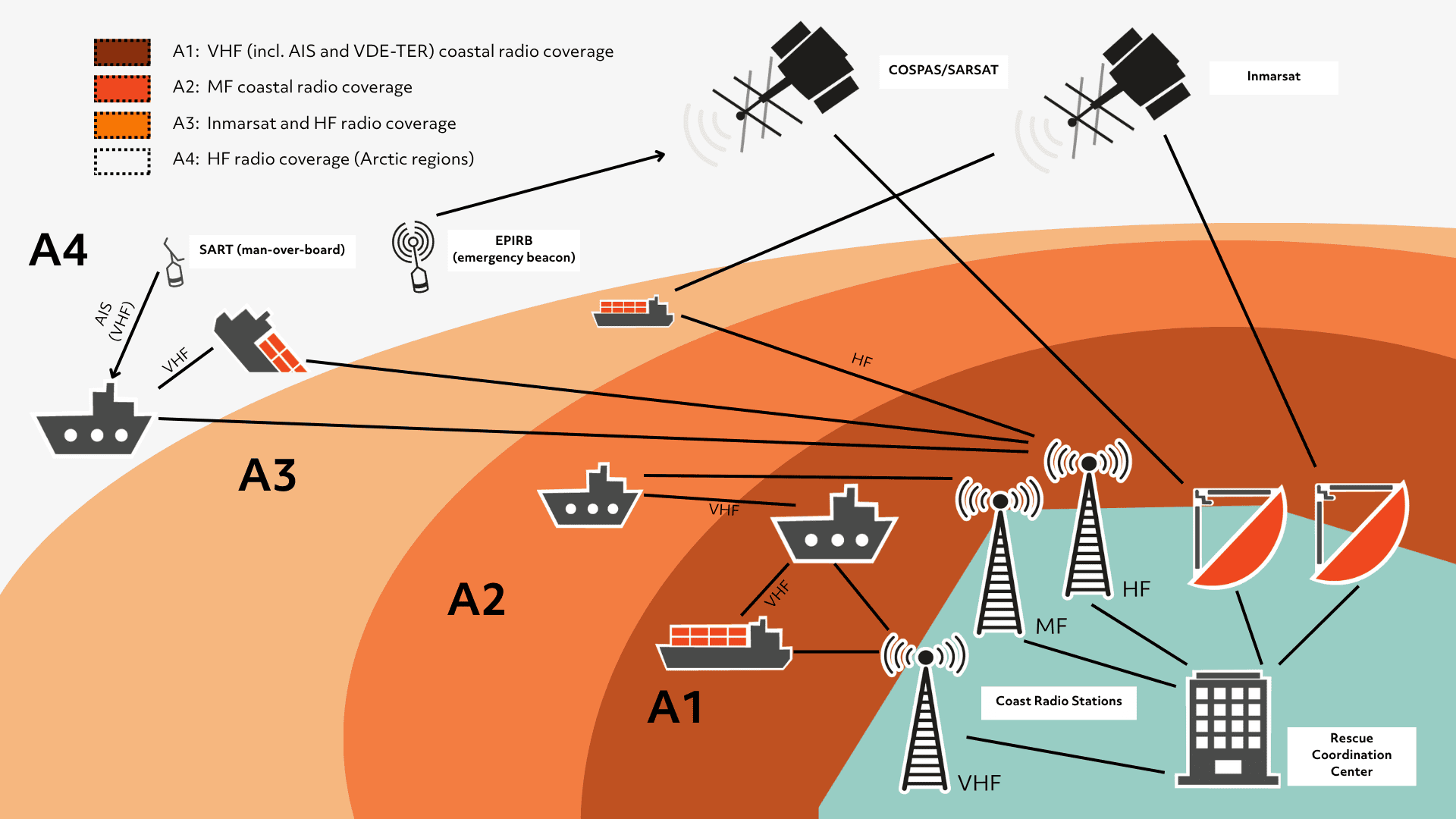
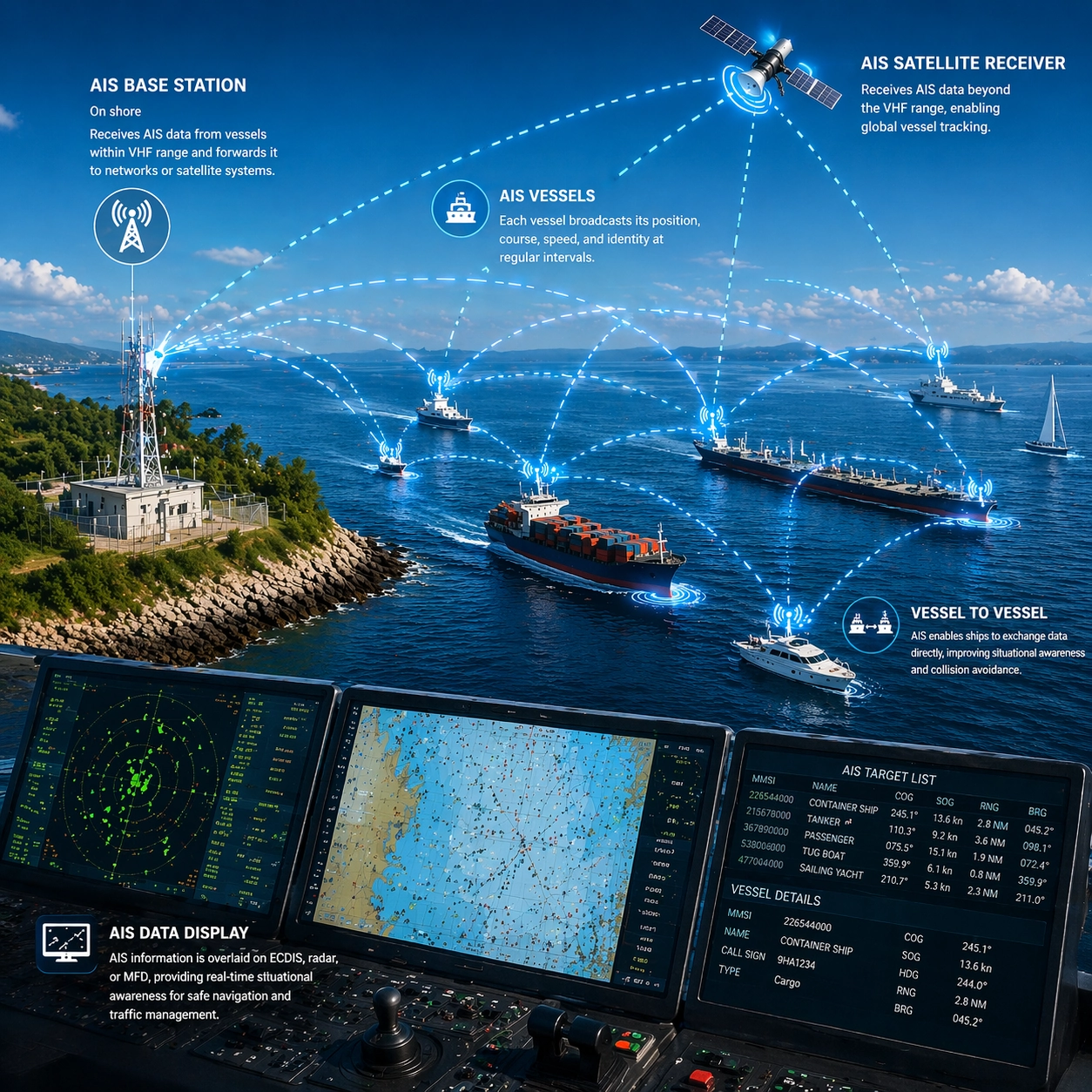
Automatic Identification System (AIS) is a VHF-based digital data link system used to identify and monitor maritime traffic through the continuous exchange of structured messages between vessels, shore-based AIS base stations, and, in extended scenarios, satellite receivers.
Unlike traditional communication systems, AIS does not rely on point-to-point links. Instead, it operates as a self-organizing broadcast network, where each node periodically transmits its own navigational and identification data over shared radio channels.
AIS data can be integrated and displayed on ECDIS, radar overlays, chart plotters, or multi-function displays (MFD), providing operators with real-time situational awareness and supporting navigation and traffic management decisions.
Before the introduction of AIS, maritime situational awareness relied primarily on radar systems and visual observation. While radar provided reliable detection of targets, it did not offer vessel identification or detailed navigational data, requiring manual interpretation and communication between ships.
As global maritime traffic increased, the limitations of these methods became more apparent, particularly in congested waters and poor visibility conditions. The need for an automated system capable of continuously exchanging vessel identity and position data led to the development of AIS.
The system was mandated by the IMO's SOLAS Convention in the early 2000s and has since become a standard component of modern navigation, forming the foundation for real-time traffic monitoring at sea.
AIS Operating Principles
AIS operates in the maritime VHF band, primarily on two dedicated frequencies: 161.975 MHz (AIS 1) and 162.025 MHz (AIS 2). These internationally allocated channels enable continuous data exchange between vessels without interfering with standard voice communications
Rather than establishing direct links between stations, AIS works as a broadcast system in which each vessel periodically transmits its own data into a shared radio environment.
The system is based on a time division multiple access (TDMA) principle. The radio channel is divided in time, allowing multiple vessels to transmit on the same frequency without causing mutual interference. Each AIS transponder independently determines when to transmit based on the surrounding radio environment, enabling efficient sharing of the communication channel without centralized coordination.
Transmission intervals are not fixed. Each AIS transponder dynamically adjusts its reporting rate depending on operational conditions, including vessel speed, course changes, navigational status, and traffic density. Vessels underway or maneuvering transmit more frequently, while anchored or slow-moving vessels reduce their transmission rate to optimize channel usage.
AIS messages contain a standardized set of navigational and identification data, including the vessel’s MMSI (Maritime Mobile Service Identity), GNSS-based position, course over ground (COG), speed over ground (SOG), heading, and navigational status. Voyage-related information such as destination, estimated time of arrival (ETA), and draught may also be included, depending on system configuration and data input.
This architecture creates a continuously updated, decentralized picture of maritime traffic, enabling both vessels and shore-based systems to maintain situational awareness without the need for direct communication links or constant operator interaction.
AIS Equipment Classes
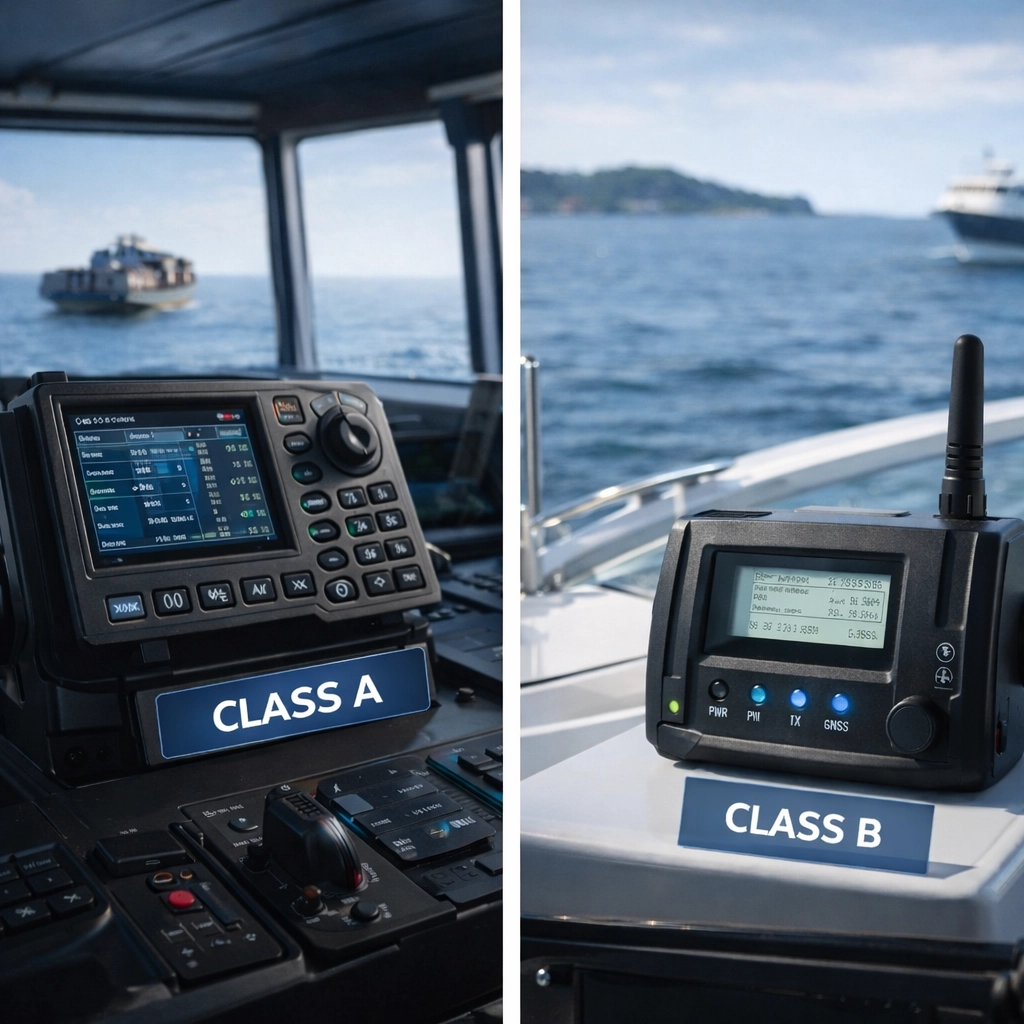
AIS equipment is generally divided into two main classes.
Class A transponders are mandatory for large commercial vessels, typically those exceeding 300 gross tonnage on international voyages. These devices operate at higher transmission power (typically around 12.5 W) and provide more frequent and reliable updates, especially in high-traffic environments.
Class B transponders are designed for smaller vessels such as recreational boats and fishing vessels. They operate at lower transmission power (typically around 2 W) and transmit less frequently, which reduces channel usage but also limits update rate and effective range.
In addition, enhanced Class B variants (often referred to as Class B+ or Class B "SOTDMA") combine higher transmission power (typically 5 W) with a more intelligent access protocol. Unlike standard Class B devices, which must listen for quiet moments, these transponders can autonomously reserve transmission slots, allowing for more frequent and reliable updates in busy waters.
Advantages and Limitations of AIS
AIS provides several key advantages over traditional navigation and traffic monitoring methods. Unlike radar, AIS can deliver vessel information even when targets are partially obscured by terrain, such as islands or coastal features, provided radio propagation conditions allow signal reception.
In addition to target detection, AIS enables direct identification of vessels by name and MMSI, allowing operators to establish voice communication via VHF radio without ambiguity. It also provides more detailed and continuously updated information about vessel movement, including speed, course, and navigational status, improving overall situational awareness.
However, AIS has important limitations and should not be considered a standalone navigation system. Not all vessels are required to carry AIS, and even among equipped vessels, the system may be intentionally disabled — a practice that is often illegal for SOLAS-class ships but remains a reality in certain regions. As a result, the traffic picture may be incomplete, especially in coastal or inland waters where smaller vessels frequently operate without AIS transceivers at all.
AIS also depends partly on manually entered data. Incorrect input, such as destination, draught, or estimated time of arrival, may lead to misleading information being displayed to other operators.
Additionally, AIS is an open broadcast system and is therefore vulnerable to data manipulation or spoofing. False positions or vessel identities can be transmitted, which may affect the reliability of AIS data in certain scenarios.
Future of AIS: VDES
The regulatory framework for VDES is currently under development, with international maritime organizations working toward its integration into existing standards. A key technological milestone was achieved in 2019, when the International Telecommunication Union allocated dedicated radio frequencies for the satellite component of VDES (VDE-SAT), enabling its future global coverage.
On the regulatory side, the IMO Sub-Committee on Navigation, Communications and Search and Rescue finalized draft amendments to the SOLAS Convention in May 2025. These amendments are scheduled for final adoption by the Maritime Safety Committee in May 2026, with the VDES carriage requirement for SOLAS vessels expected to enter into force on January 1, 2028.
This timeline establishes a clear transition path for the maritime industry, marking a gradual shift from AIS toward a more advanced, secure, and higher-capacity communication system.